
Benefits and Value of Precast Fencing
Durability and Weather Resistance
Storms hammer the skyline and the years carve their marks, yet in South Africa a quiet titan stands at the boundary: precast concrete fence. Industry estimates place a service life that can stretch toward fifty years, far surpassing timber or steel. It’s a boundary that endures without drama, a steadfast chorus against the elements.
The durability translates to real value across properties, reducing upkeep and offering predictable performance in heat and rain.
- Long service life with minimal upkeep
- Resistance to rot, termites, and corrosion
- Weather resistance in sun-drenched or coastal climates
- Enhanced security and privacy with a consistent finish
In design terms, it brings quiet elegance: clean lines, modular assembly, and a finish that stays true despite SA’s changing moods—from veld winds to coastal spray and beyond.
Faster Installation and Labor Savings
In a rural landscape where every minute matters, faster installation is more than convenience—it’s relief. Industry data suggests installation time can be up to 60% faster with precast concrete fence, turning days of on-site labour into a few focused sessions and a boundary that’s ready when the sun rises.
With factory-made components, crews waste less time chasing discrepancies and more time building. The result is tangible labour savings, less site traffic, and a boundary that goes up neatly in a single shift.
- Shorter on-site time and fewer labour hours
- Less weather-related delays and site disruption
- Consistent quality reduces rework and speeds handover
Across South Africa—from the fretted farmlands to coastal towns—the boundary blends security with quiet elegance, delivering value that traditional methods can’t match. It earns its keep through time saved and steady performance, day after day.
Long-Term Cost Effectiveness
Cost certainty beats cost creep! Industry data suggests long-term costs can be up to 40% lower with a precast concrete fence when you look across decades, not just seasons. The initial outlay buys a boundary that requires less upkeep, fewer replacements, and less frequent interventions. In South Africa’s varying climates, that translates to fewer trips to site and fewer budget shocks.
- Lower ongoing maintenance and repainting because of durable finish.
- Predictable depreciation and insurance savings due to consistent performance.
- Longer service life reduces total cost of ownership, especially in rural landscapes.
That quiet return on investment is the kind of stubborn value farmers and estates in South Africa rely on when budgets tighten.
Aesthetic Consistency and Design Flexibility
Across South Africa’s sun-warmed farms and estates, a boundary is a story etched into the landscape. In fact, 25% more sites report stronger curb appeal within the first year after a precast concrete fence goes up. Aesthetics shape welcome and distance with every panel.
Design flexibility and aesthetic consistency let you carve a boundary that fits terrain and mood. From color and texture to panel size, the look can harmonise with native flora.
- Color and texture options that mimic stone, brick, or modern finishes
- Uniform lines and precise alignment for a polished, engineered look
- Modular panel sizes and smart joinery for curved or irregular boundaries
- Seamless integration with gates, lighting, and landscape features
This versatility gives rural landscapes, game reserves, and urban estates a consistent identity that respects the land. A precast concrete fence stands as a quiet, adaptable guardian.
Environmental Impact and Sustainability
“A boundary should be quiet and enduring,” notes a long-time estate manager, and in South Africa that calm comes with responsible choices. The precast concrete fence offers environmental discipline alongside aesthetic presence, cutting maintenance cycles and the need for repainting. Factory fabrication minimizes onsite waste, and its long service life reduces replacement trips across farms and estates.
Environmental value shows up in tangible terms:
- Lower lifecycle emissions thanks to fewer coatings and longer service intervals
- Reduced on-site disturbance and material waste due to modular, prefabricated panels
- Efficient use of space with precise alignment that reduces excess fill and excavation
- End-of-life options that favour recycling or repurposing concrete components
Beyond durability, a precast concrete fence acts as a steward of soils, water, and native flora, aligning governance with grace across South Africa’s varied landscapes. It’s a boundary that speaks softly and stands firmly.
Security and Privacy Features
A boundary should feel like a fortress without shouting. In South Africa, where privacy is priceless, a precast concrete fence acts as a quiet guardian—clear lines, solid intent. A respected estate manager often says: security should be earned with presence, not noise, and this boundary delivers that distinction.
The system delivers security without shouting. The precast concrete fence uses flush anti-climb panels, solid cores, and concealed fixings to keep trespassers at bay while preserving a clean exterior.
- Anti-climb, uninterrupted surfaces that deter scaling
- Privacy through solid panels with minimal gaps
- Concealed fixings for a seamless exterior
- Easy integration with secure, lock-ready gate assemblies
In practice, this translates to low maintenance and consistent performance across seasons, keeping privacy intact on farms and estates while the boundary quietly earns its keep.
Design Options and Customization for Factory-Made Fences
Heights, Widths, and Panel Configurations
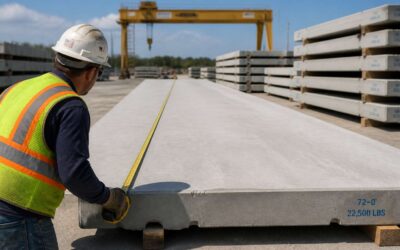
Design options for factory-made fencing are a careful study in proportion and purpose. Heights, widths, and panel configurations aren’t afterthoughts but the levers that shape security, sightlines, and curb appeal. For a precast concrete fence, customization is baked into the process, delivering consistent quality across sites in South Africa while honoring local architectural vernacular. These choices create a striking silhouette across suburbia and countryside!
- Heights: 1.2 m, 1.8 m, 2.4 m
- Widths: 2 m, 3 m, 4 m panel spans
- Panel configurations: solid, lattice, or decorative perforations
Each option preserves a distinctive, uniform finish that suits both urban matrices and rural enclaves, ensuring a seamless fit with South Africa’s diverse landscapes.
Texture, Finish, and Color Options
Texture is more than touch; it is a memory stitched into a boundary. In a world of shifting light across South Africa’s streets and veld, a precast concrete fence can speak with a chosen texture, finish, and color that feels native rather than copied.
Factory-made customization translates into a consistent palette across sites, letting the fence harmonize with stone, brick, wood, or the landscape. You can opt for smooth, brushed, or granular textures, and finish options range from matte to satin—each revealing the material’s quiet honesty. Color choices extend from pale concrete hues to rich earth tones, charcoal, or terracotta, echoing veld and dusk while maintaining durability with a precast concrete fence.
- Textures: smooth, brushed, pebble
- Finishes: matte, satin
- Colors: natural gray, earth tones, charcoal, terracotta
Architectural Styles and Visual Integration
Boundary lines tell stories as surely as names at a gate. A precast concrete fence lets you choose a design that grows with the land, time-tested and steady. In South Africa’s changing light, its silhouette can feel native, not borrowed.
Design options and factory-made customization shape architectural moods without losing cohesion. Selected styles include:
- Rustic Farmstead
- Contemporary Minimal
- Colonial Heritage
These moods align with stone, brick, or timber and help the fence integrate with the surrounding veld.
Visual integration isn’t about shouting; it’s about letting lines echo the horizon and openings frame views. With careful choices, the precast concrete fence becomes a quiet part of the landscape, a boundary that speaks softly. The result is architecture that feels both durable and alive!
Accessories and Gate Integration
Design options for factory-made fences begin with panel profiles and post spacing, then flow into texture, color, and joint details. A precast concrete fence stays steady as the land shifts, letting you tailor height and rhythm without sacrificing cohesion.
Accessories and gate integration can elevate function and flow on South African estates, from discreet weather seals to automated access.
- Integrated gate hardware and weather-sealed access points
- Automation-ready switchgear and remote control compatibility
- Decorative post caps and lighting channels
With thoughtful customization, we see the boundary reading as a living part of the landscape—durable, useful, and quietly radiant.
Code Compliance and Standards
Shaped by shadow and the patient pulse of stone, a precast concrete fence holds the ground as the land exhales beneath it. In South Africa, we explore design options—modular geometry and rhythm—then drift toward the poetry of line, scale, and proportionality, each choice measured to the heartbeat of your estate.
Customization meets code with a deliberate cadence: heights and proportions align with municipal bylaws and SANS standards, while factory precision stitches each segment into a seamless boundary. The result feels inevitable—a boundary that respects the landscape and keeps intruders at bay without shouting.
A handful of design options in this frame stay playful yet compliant:
- Modular modules that accommodate uneven terrain and sightlines
- Subtle seam design to shed rain and ease maintenance
- Finishes inspired by local geology to weather gracefully
Installation Process and Project Planning
Site Preparation and Foundations
Sticky with potential, the installation of a precast concrete fence often feels like cheating the calendar. Industry chatter suggests you can shave installation time by up to half when panels arrive ready to set. In South Africa, that translates to fewer weather-worry days and quicker site turnover.
Project planning for a precast system starts long before the first crane horn. We lock boundary lines, identify services, and align delivery windows so panels don’t become decor in a storm. Foundations also deserve respect—a level, well-compacted base with proper anchorage keeps everything honest and straight.
- Site survey and boundary confirmation
- Utility checks and risk assessment
- Foundation design and anchor layout
- Delivery coordination and panel staging
Site preparation should respect drainage, soil stability, and access routes. A calm sequence minimizes on-site hiccups, keeps safety front and centre, and ensures the precast concrete fence sits true to the gridline and design intent.
Panel Handling and Erection Steps
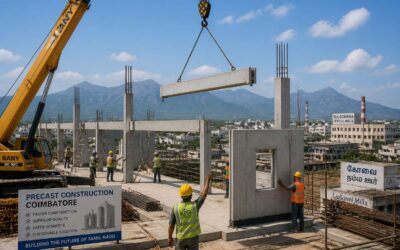
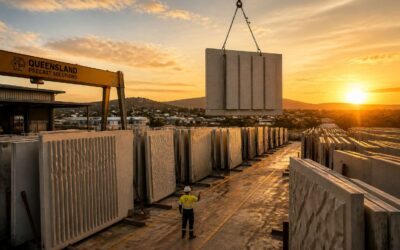
Faster installation isn’t rocket science—it’s smart planning and panels arriving ready to set. In South Africa, that translates to fewer weather-worry days and quicker site turnover. The installation process hinges on precise panel handling and thoughtful erection steps to keep the fence true to the grid and the budget intact. When the stars align—crane rhythm, skilled rigging, and a dash of luck—the precast concrete fence slides into place with minimal fuss.
- Receive and inspect panels on delivery for cracks, warping, or moisture.
- Position them along the gridline using guides, a plumb line, and temporary shims.
- Anchor, level, and secure each panel, then verify joint alignment and overall straightness.
Panel handling and erection steps are as much about process discipline as material quality, delivering a clean line that stands the test of time and Pretoria’s plucky wind.
Curing Time and Weather Considerations
Fences go up on schedule or become polite suggestions. In SA, weather-smart planning trims install time and keeps budgets intact. The installation process hinges on a tidy choreography—alignments, crane rhythm, and precise joints—for a precast concrete fence that lands true to grid.
Project planning plus curing time demand a calendar with cushion. Curing responds to temperature, humidity, and wind—curious allies in SA weather. Schedule pours for mild hours, shield joints, and employ curing compounds to preserve strength without drama.
- Temperature and humidity targets
- Sun and wind protection
Handled with courtesy, the process yields a boundary that behaves—a quiet neighbour, sturdy and poised for the long haul.
Coordination with Other Trades and Permits
South Africa’s fence projects prove timing beats brute force. The installation process for a precast concrete fence hinges on staged moves—alignments, crane rhythm, and flawless joints—that land squarely on the grid while staying courteous to neighbours and tenants. Project planning and permits sit at the center, guiding how trades sync and approvals are secured ahead of the first panel.
Key coordination touchpoints include:
- Permit submissions and approvals
- Utility locate and safe dig operations
- Crane scheduling and site access coordination
With disciplined planning, this boundary becomes a neighbour-friendly, weather-ready feature—an upgrade that holds form and function for years to come, thanks to the precision of a precast concrete fence.
Project Timeline and Milestones
A tight installation cadence is the spine of a sturdy boundary. A well-paced plan can cut site disruption by roughly 30%, letting neighbours breathe and crews stay focused. For a fence, this rhythm yields predictable weather windows and steady progress across South Africa’s diverse landscapes.
Project planning for a precast concrete fence unfolds along a simple timetable of milestones. The following steps keep the build moving with precision:
- Kick-off and site survey
- Foundation checks and anchorage planning
- Panel fabrication and delivery coordination
- Erection sequence and alignment checks
- Joint finishing and surface touch-ups
- Final inspection and handover documentation
With that cadence, the boundary becomes a neighbourly, weather-ready feature—proof that careful timing outshines brute force. The boundary speaks of planning as much as prowess, a lasting boundary that respects space and daylight.
Maintenance, Durability, and Lifecycle
Maintenance and Cleaning Routines
A precast concrete fence stands as a quiet sentinel, enduring where other materials falter. In South Africa, projects using this system report up to 40% lower maintenance costs over two decades, turning upkeep from concern into confidence.
Maintenance is straightforward. The dense, non-porous surface resists staining and weathering, keeping lines sharp under South Africa’s sun and rain. Regular cleaning removes dust and organic growth, while periodic inspections catch hairline cracks before they expand—protecting the fence’s lifecycle.
Lifecycle maintenance and cleaning routines are your long-game strategy. Gentle washing, avoiding harsh chemicals, and addressing any efflorescence preserves appearance and performance across seasons.
- Structural integrity checks
- Surface cleanliness and staining
- Coating wear as applicable
- Gate hardware and panel alignment
Weather Resistance and Seasonal Durability
Across South Africa, a precast concrete fence is not merely a boundary; it’s a long-tail sentinel. Projects report up to 40% lower maintenance costs over twenty years, turning upkeep into quiet confidence. It gazes out on sun-burnished walls and storm-swept days with an unyielding, almost mythical steadiness.
Maintenance is straightforward. The dense, non-porous surface resists staining, while regular washing keeps lines crisp. Periodic inspections catch hairline cracks before they widen, protecting the fence’s lifecycle.
- Structural integrity checks
- Surface cleanliness and staining
- Gate hardware and panel alignment
Durability endures; through heat, rain, and the Southern sun, the system remains reliable. Lifecycle weather resistance preserves color and texture, while seasonal durability guards against UV exposure and moisture swings. The result is a steady aesthetic and preserved performance across years.
Repair and Replacement Strategy
A sharp statistic lands like a brick: across South Africa, projects report up to 40% lower maintenance costs over twenty years when a precast concrete fence is in place. Not hype—hard data from the field. Maintenance becomes a quiet ritual: periodic washing, and targeted checks on joints and posts to keep that stoic, weatherproof look intact.
- Structural health checks for crack progression and joint stability
- Surface cleanliness to preserve even color and finish
- Gate hardware, hinges, and panel alignment to ensure reliable operation
Durability holds fast against the SA sun, rain, and sea breeze. UV-stable finishes and dense mixes resist fade and wear, so the fence keeps its character year after year. A thoughtful lifecycle repair and replacement strategy for a precast concrete fence centers on predictable planning, modular parts, and local fabrication partners who can swap panels or refresh textures without tearing down the boundary.
Warranty and Support Services
A precast concrete fence stands as a sentinel between land and living, a boundary that pays its way. Field data from South Africa shows a 40% maintenance saving over twenty years—proof that routine upkeep stays quiet and manageable. With steady care, maintenance becomes a cycle of washing and joint checks that preserve the character.
Durability holds fast against the South African sun, rain, and sea breeze. UV-stable finishes and dense mixes resist fade, while joints and posts keep steadfast alignment. The fence ages like stone carved by time, retaining color and form through tempests and winds. I’ve watched them endure decades of sun and wind.
Lifecycle Warranty and Support Services anchor the promise. Modular parts and local fabrication partners mean panels can be swapped without dismantling the boundary. The program often includes:
- Panel replacement and texture refresh under warranty
- Joint resealing and hinge/track inspections
- Proactive maintenance scheduling and remote diagnostics
End-of-Life Options and Recyclability
Maintenance for a precast concrete fence unfolds like a disciplined ritual—gentle washing, periodic joint checks, and selective resealing. The routine stays quietly efficient, turning inevitable wear into a predictable rhythm that preserves texture and edge against South Africa’s dust, sun, and seasonal shifts.
Durability is a settled virtue, not brute force. UV-stable finishes resist fading, dense mixes shrug off moisture and wind, and precise post-panel alignment endures. It ages like weathered stone, holding color and form through years of sun-scorched summers and rain-lashed winters.
Lifecycle End-of-Life Options and Recyclability open a humane path for materials at retirement. Instead of a wasteful exit, consider reuse, recovery, and refurbishment that keep resources circulating:
- Reuse of panels and components in new projects
- Local recycling partnerships for concrete and accessories
- Refurbishment strategies to extend service life
0 Comments