
Overview of precast rail slab track solutions
Definition and scope of precast slab track solutions
In South Africa’s bustling rail corridors, the shift to modular construction has become a measurable fact: more than half of major urban rail modernisation projects favour a precast slab track system. This approach stitches factory-made slabs that carry rails, delivering speed, consistency, and a quieter on-site choreography.
A ballast-less track solution uses reinforced concrete slabs with integral rail seats, laid on prepared foundations and connected by precision joints. The scope spans urban metros, intercity upgrades, and freight corridors seeking shorter construction windows, reduced vibration, and predictable maintenance cycles.
Key scope elements include:
- Off-site fabrication and stringent quality control
- Rapid installation with modular components
- Ballast-less design that dampens noise and lowers lifecycle costs
In the SA context, this ballast-friendly approach embodies careful design, precise execution, and modern engineering pragmatism that respects both timetable and terrain.
Key components and assemblies
Across South Africa’s rail corridors, modular construction is reshaping timelines—projects using a precast slab track system shorten construction windows by up to 30%.
These assemblies combine off-site fabrication, integral rail seats, precision joints, and ballast-free foundations to deliver speed, vibration control, and predictable maintenance.
- Off-site fabrication and modular slabs
- Integral rail seats and rail fastenings
- Precision joints for drainage and expansion
- Ballast-less foundations and damping layers
- Quality assurance through factory testing
In South Africa’s evolving corridors, this approach pairs pragmatism with engineering elegance—a quiet reminder that speed and care can coexist amid challenging terrain.
Industrial applications and use cases
South Africa’s rail spine is moving faster than a gazelle with caffeine, and the precast slab track system is at the front of the stampede. Across major corridors, projects are shaving weeks from build schedules while preserving ride quality. It’s smart, scalable engineering that converts off-site work into on-site momentum, with fewer delays and smoother commissioning.
Industrial applications and use cases span urban transit, regional freight corridors, and logistics hubs. Use cases include:
- Urban commuter networks and light-rail extensions
- Regional freight corridors and intermodal routes
- Port and inland terminal expansions
Ultimately, it anchors speed with reliability, reducing ballast maintenance and enabling faster maintenance windows across challenging terrains.
Standards and compliance overview
Across South Africa’s rail corridors, the precast slab track system acts as a catalyst for speed and reliability. Its off-site fabrication reduces surprises on site and supports smoother commissioning, preserving ride quality on demanding routes. By decoupling concrete elements from ballast and rail, it reshapes timelines without compromising safety. The approach suits urban networks, freight corridors, and port expansions, delivering a stiff foundation that withstands heavy axle loads and temperature swings. In a climate where every week matters, this system proves its value in tangible performance gains.
Standards and compliance underpin every installation. The precast slab track system must harmonize with South African National Standards (SANS) and rail practices, ensuring interoperability across operators and equipment. Rigorous factory controls and third-party inspection underpin safety, while performance testing at key milestones tightens reliability.
- Adherence to SANS and operator requirements
- Factory production control and third-party QA
- Safety, testing, and commissioning benchmarks
Benefits and performance advantages of slab track systems
Durability and lifecycle cost
Across South Africa’s expanding rail corridors, downtime is a currency nobody can afford. The precast slab track system is rewriting the arithmetic of construction and maintenance, delivering precision, speed, and reliability that used to take weeks to assemble by hand. Its modular nature translates into fewer site surprises and steadier project timelines.
Benefits and performance advantages stack up in a single, coherent profile. Here’s what to expect on deployment:
- Rapid factory fabrication minimizes on-site disruption and accelerates commissioning.
- Damped vibrations and uniform load distribution extend sleeper life and lower maintenance costs.
- Standardized components enable predictable lifecycle costs and easier future upgrades.
Durability and lifecycle cost are not merely budgets but assurances—this precast slab track system holds up to the rigours of high-traffic routes, reducing total cost of ownership over decades.
Vibration and noise reduction
Across South Africa’s rail corridors, vibration is a companion you don’t invite. The precast slab track system tames that rhythm with quiet confidence, turning chattering wheels into a measured, predictable cadence. By guiding energy into engineered dampers, it keeps sleepers from buckling under pressure and preserves the clarity of every passing train.
The system also offers tangible performance advantages you can count on:
- Effective vibration attenuation across a broad frequency range
- Lower noise levels in adjacent spaces through resilient layer geometry
- Predictable, uniform load transfer that supports longevity and ride quality
In this way, a lightweight, modular system transforms tricky terrains into smooth, reliable corridors—minimizing disruption and letting networks grow smarter with every mile!
Precision and speed of construction
Across South Africa’s rail projects, early reports hint at up to a 25% faster installation when using the precast slab track system. That’s not marketing puff; it’s measurable throughput that keeps communities moving without the usual site backlog.
Precision and speed of construction drive the value; factory-made slabs with tight tolerances snap together, trimming on-site fiddling and weather risk.
- Factory-made components deliver consistent quality and dramatically reduce rework
- Rapid on-site assembly minimizes disruption to passengers and adjacent communities
- Modular design supports scalable upgrades and straightforward maintenance planning
- Lower total project risk due to fewer temporary works and simplified logistics
All of this translates into smoother, smarter corridors where networks can grow without the usual headaches.
Maintenance and inspection advantages
Across South Africa’s rail corridors, the precast slab track system is quietly reshaping reliability. Early pilots show up to 25% fewer disruption hours during peak periods, translating to steadier timetables and happier commuters.
Maintenance and inspections benefit from factory precision. Each slab is built to tight tolerances, reducing on-site tweaks, while modular joints simplify replacements and predictable checks. From the field, we hear fewer surprises and smoother maintenance planning. The result: longer life, fewer surprises, and streamlined asset management.
- Modular section replacement closes faster
- Consistent factory tolerances curb rework
- Accessible joints aid inspections
All this translates into smoother, safer corridors where upgrades scale with confidence, and communities enjoy reliable service thanks to the precast slab track system, with diminished logistical headaches.
Environmental and sustainability considerations
Across South Africa’s rail corridors, the precast slab track system is reshaping reliability—pilot projects report up to 25% fewer disruption hours during peak periods. The result is steadier timetables and calmer commuters. Benefit highlights include faster assembly, factory-grade precision, and modular joints that speed replacements when needed.
Key performance advantages in the field include:
- Faster section replacement with modular assemblies
- Tighter factory tolerances reduce rework and field tweaks
- Joints designed for easy access during inspections
Environmental and sustainability considerations are integral, not add-ons: lower lifecycle energy, reuse of precast elements, less on-site waste, reduced maintenance traffic, and quieter corridors for communities. The system’s efficiency compounds over time, aligning with South Africa’s sustainability goals and delivering long-term carbon savings. For planners, the precast slab track system also reduces material transport and spoil, cutting emissions and easing upgrades.
Design and engineering considerations for precast slab track
Geotechnical requirements and ground conditions
Rail upgrades are reshaping South Africa’s cities, and the difference between good and great track work is how you design for ground realities. A precast slab track system must translate local conditions into predictable performance. Key considerations include differential settlement, load transfer to the ground, and interaction with fast-track construction methods.
Geotechnical requirements and ground conditions demand careful assessment of bearing capacity, groundwater behavior, and soil durability. To illustrate, the following factors often drive the design choice:
- Ground bearing capacity and settlement potential
- Groundwater presence and drainage planning
- Soil type, continuity, and frost or clay expansion tendencies
From there, the engineering team selects slab geometry, joint details, and bearing pads to match the site. The result is a robust, modular system that remains true under dynamic railway loads while keeping maintenance practical and predictable—true value for modern modular rail construction.
Alignment, tolerances, and geometry
In urban railscapes, every millimeter counts. ‘Measure twice, cut once’ isn’t quaint here—it’s the creed for a precast slab track system, where alignment, tolerances, and geometry determine ride quality long after the cranes depart. A seasoned SA engineer notes: ‘If the plan reads straight, the train must ride straight.’
Alignment fixes the footprint; tolerances bound settlement; geometry fuses joints, pads, and slab edges. The aim is a robust, modular system that stays true under dynamic loads while keeping fast-tracking on track. Consider these design levers:
- Alignment tolerance across the slab surface
- Joint geometry and sealing
- Bearing pad stiffness and placement
Smart geometry and consistent manufacturing tolerances translate to quiet rides, reliable maintenance windows, and fewer surprises on site—the promise of modular slab systems in SA’s evolving urban corridors.
Thermal expansion and moisture considerations
Integration with signaling and electrical systems
The design of a precast slab track system thrives on interfaces as precise as a master storyteller’s heartbeat. In South Africa’s expanding rail corridors, engineers choreograph geometry, fastening, and future maintenance so that every segment slots together with minimal disruption. Real-world projects report up to 30% faster installation and reduced on-site weather exposure.
- Signaling and electrical interface alignment for cabinets and track circuits
- Cables routed to avoid electromagnetic interference while preserving accessibility
- Clearances and joint detailing to facilitate future upgrades
To harness the full potential of the precast slab track system, design teams map signals, power feeds, and data trunks early, weaving them through the concrete with beauty and care. Plan for redundancy, proper grounding, and moisture pathways to keep systems reliable under Africa’s climate, ensuring trains breathe smoothly and signals stay true to their path.
Manufacturing, fabrication, and supply chain for slab track components
Casting methods, materials, and quality assurance
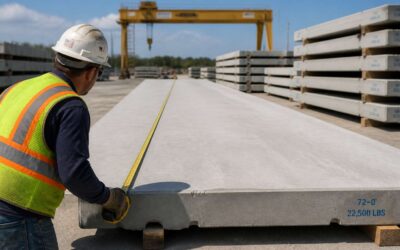
In the workshop where rails gain their voice, we choreograph manufacturing, fabrication, and the supply chain for slab track components with clockwork precision. The precast slab track system starts in controlled environments, where formwork, curing, and assembly meet with predictable accuracy. For South Africa’s expanding rail corridors, factory-grade consistency translates to faster on-site installation and enduring performance across varied climates.
- Casting methods: modular moulds and steam-assisted cures for flat, true geometries.
- Materials: high-strength concrete, corrosion-resistant reinforcement, and protective coatings.
- Quality assurance: non-destructive testing, dimensional checks, and rigorous batch traceability.
An integrated supply chain links precast facilities with operators, and we keep the precast slab track system moving through transparent scheduling, local sourcing, and contingency planning, ensuring steady progress from factory floor to track bed.
Factory production vs on-site assembly
Across South Africa’s waking railways, progress wears a velvet glove and a steel heartbeat. The precast slab track system moves with clockwork precision, shaving days off the build and delivering predictability in the rain. Project leaders note up to 30% faster installation when factory-made components lead the way.
Inside the workshop, manufacturing hums like a controlled ritual: components cast, cured, and staged for shipment. Factory production, when compared with on-site assembly, trades chaos for cadence; the distance between mould and ballast narrows to a measured step, the result a quieter, steadier wake of progress.
In practice, the supply chain keeps moving through simple, stubborn truths:
- Transparent scheduling linked to operators
- Local sourcing and reliable logistics
- Contingency planning for disruptions
From factory floor to track bed, the precast slab track system carries the night forward.
Logistics, delivery schedules, and storage
Factory floors hum with precision as casting, curing, and final inspection forge the precast slab track system into a repeatable, dependable core component. Across South Africa’s rail corridors, this controlled fabrication cadence converts uncertainty into certainty, shaving lead times and smoothing budget cycles.
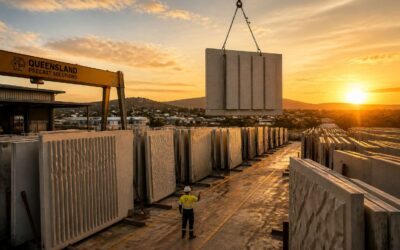
Logistics teams align production with delivery schedules and storage needs, using sheltered yards and reinforced handling to maintain component integrity from factory gate to ballast. The flow is intermodal-friendly, with rail and road links designed to keep the precast slab track system moving.
- Sheltered storage and inventory tracking
- Secure packaging and weather protection
- Just-in-time delivery to site gates
Through the cycle from casting to track bed, storage discipline keeps disruption at arm’s length, while robust contingency plans cushion the project from weather and demand swings.
Certification and traceability of components
Across South Africa’s rail corridors, on-time delivery isn’t luck—it’s engineered. A well-managed precast slab track system slashes lead times and steadies budgets, because every casting and curing step is calibrated for repeatable precision.
Manufacturing and fabrication rely on controlled environments, skilled QA, and a resilient supply chain. Certification and traceability aren’t add-ons; they are the spine of the precast slab track system. Each component bears material certificates, batch records, and serial tags enabling end-to-end tracking from plant to ballast.
- Certification marks and batch traceability
- Material certificates and non-destructive testing reports
- RFID or serial tagging for inventory control
- Audit trails linking design, production, and delivery records
Delivery, storage, and site handover are orchestrated to weather disruptions—sheltered yards, weatherproof packaging, and just-in-time gates. This care protects the precast slab track system and keeps it primed for rapid integration with signalling, drainage, and ballast planners.
Installation, commissioning, and lifecycle management
Site preparation and formwork removal
“Speed without sacrificing precision is the new standard,” a veteran site manager notes as the precast slab track system takes shape in a South African corridor. Installations loosen from fevered hurry when panels are handled with care, joints micrometric, and ground movements listened to like a quiet breath between steps!
Site preparation and formwork removal are critical to success. Thorough ground preparation, drainage planning, and careful backfill minimise deformation. When forms are stripped, clean interfaces and consistent bearing become the platform for precise commissioning and predictable lifecycle performance.
- Site survey and ground preparation
- Formwork installation and panel staging
- Panel placement with alignment checks
- Post-placement curing, backfill, and joint sealing
Commissioning follows with alignment verification, traffic simulation, and signaling integration. Lifecycle management threads through inspection regimes, wear monitoring, and planned refurbishment, keeping the track resolute in changing conditions.
Handling, lifting, and installation sequences
Across South Africa’s rail corridors, installation with the precast slab track system often arrives 20% faster without sacrificing precision. The modules arrive as certainty, and crews move with a steady rhythm—weight, balance, and joints aligning under open skies.
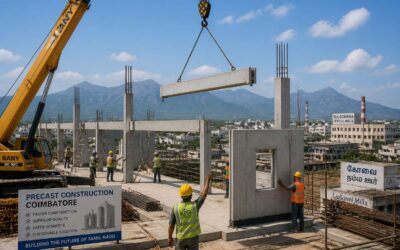
Handling, lifting, and installation sequences unfold like a cautious dance. A crane hums, slings are tested, and panels settle into their lines with care. Consider these essentials:
- Safe rigging coordination
- Clean interfaces and bearing seating
- Documented stage progression
After the last panel, a quiet ritual begins: alignment checks, system tests, and signaling readiness are verified, then the focus shifts to wear monitoring and planned refurbishment. Over time, these routines anchor reliability as communities rely on the rails.
Quality checks, testing, and commissioning
Installation, commissioning, and lifecycle management for the precast slab track system demand more than brute strength; they require disciplined quality checks, precise testing, and a clean commissioning flow. Across South Africa’s rail corridors, every joint and interface is prepared for service, with alignment verified and bearings seated before the next segment is released.
- Pre-commissioning checks: alignment, bearing seating, and interface readiness
- On-site commissioning: functional tests, signaling integration, and load simulations
- Handover: documentation, as-built records, and warranty disclosures
Post-handover, lifecycle management shifts into wear monitoring and refurbishment planning. A data-driven approach keeps the precast slab track system honest: trends, residual life estimates, and proactive maintenance extend reliability under demanding service.
Long-term maintenance, retrofits, and end-of-life options
The real workout begins after the last segment is set and the line goes live. In South Africa’s bustling rail corridors, the precast slab track system earns its keep through disciplined maintenance, not brute strength.
With wear monitoring, residual-life estimates, and interface health dashboards, teams anticipate failures before they show up as service interruptions. Data-driven insights guide lubrication schedules, bearing seating checks, and retrofit planning, keeping trains moving smoothly through peak seasons and load cycles.
Long-term maintenance, retrofits, and end-of-life options are coordinated through a lifecycle plan that prioritizes safety, cost efficiency, and sustainability. Consider these opportunities:
- component refurbishments and bearing replacements
- upgrades to accommodate higher speeds or heavier loads
- recycling and reclamation of materials at end-of-life
0 Comments